
NEWS
Lone Worker Safety on Remote Sites: How CCTV Supports Your Duty of Care
Lone working on remote sites is one of the areas where health and safety obligations and practical operational reality are most in tension. The work needs to be done: a site inspection, a maintenance visit, a survey on a remote utilities project, and sometimes it genuinely can’t be done with two people present. But the duty of care to that lone worker doesn’t go away because the logistics are difficult.
In 2026, monitored CCTV on remote sites is increasingly recognised not just as a theft deterrent but as a meaningful contribution to lone worker safety, providing a layer of oversight that matters when a person is working alone in a location where help is not close at hand.
What the law says about lone workers
The Health and Safety at Work Act 1974 requires employers to ensure, as far as is reasonably practicable, the health, safety, and welfare of all employees, including those working alone. The Management of Health and Safety at Work Regulations 1999 require employers to carry out a risk assessment that specifically considers the risks associated with lone working.
The HSE is clear on this: lone working is not prohibited, but it requires a specific risk assessment and appropriate control measures. Those control measures must be proportionate to the risks, and on a remote site, the risks are heightened by the simple fact that help is further away and an incident is harder to detect quickly.
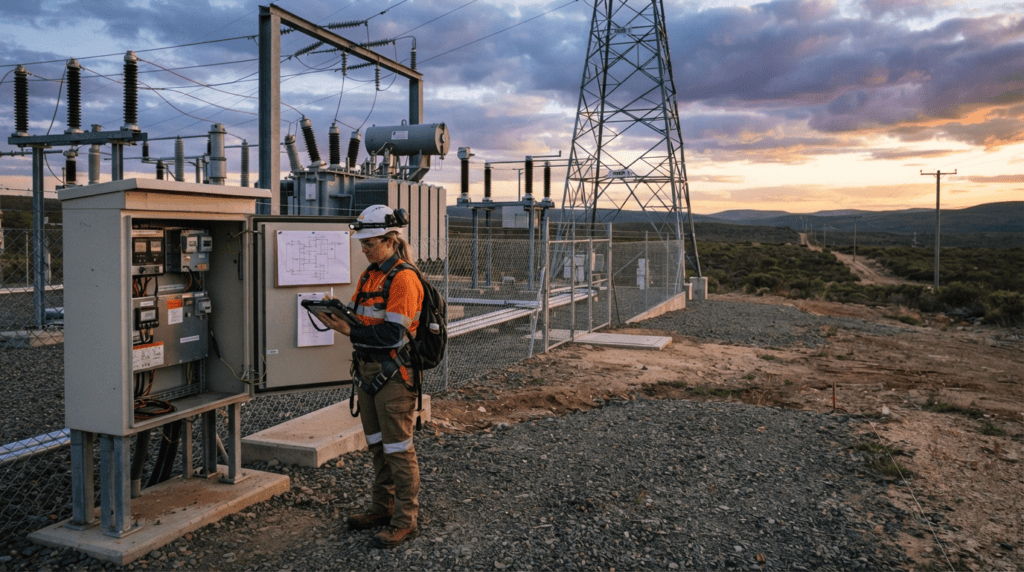
The specific risks of lone working on remote sites
Injury without detection, a slip, a fall, or a medical event on a remote site without another person present can result in an extended period before discovery. The faster an incident is detected, the better the outcome. On a site with no monitoring, detection may wait until the worker fails to return or check in.
Security threat, a lone worker on an isolated site is more vulnerable to confrontation from trespassers or criminal groups than a staffed site. The physical isolation removes the deterrent effect of collective presence.
Mental health and wellbeing, extended periods of lone working in isolated environments carry wellbeing risks that are less visible but real. The knowledge that a site is monitored, that someone is aware of activity, can itself reduce the psychological burden of isolated working.
Communication failure, remote sites often have poor mobile signal. A lone worker whose phone fails to connect cannot raise an alarm or confirm their safety through conventional means.
How monitored CCTV contributes to lone worker safety
A 24/7 ARC-monitored CCTV system on a remote site provides several capabilities that are directly relevant to lone worker safety:
Continuous presence awareness, the monitoring centre can see activity on the site in real time. An operative who enters the monitored area and then stops moving, or who triggers a detection event in an unexpected area, can be assessed by an operator and, if necessary, checked on through the audio challenge system.
Rapid incident detection, if a lone worker suffers an injury or medical event within camera coverage, the monitoring centre is best placed to detect the absence of expected movement and initiate a welfare check through the keyholder escalation process.
Deterrence of third-party threats, the visible presence of a monitored CCTV tower reduces the likelihood of a confrontational incident with trespassers or criminal groups, one of the specific risks lone workers on remote sites face.
Audio communication, the two-way audio capability on monitored towers means an operator can make contact with a lone worker directly through the tower speaker in a welfare check situation, even where mobile signal is absent
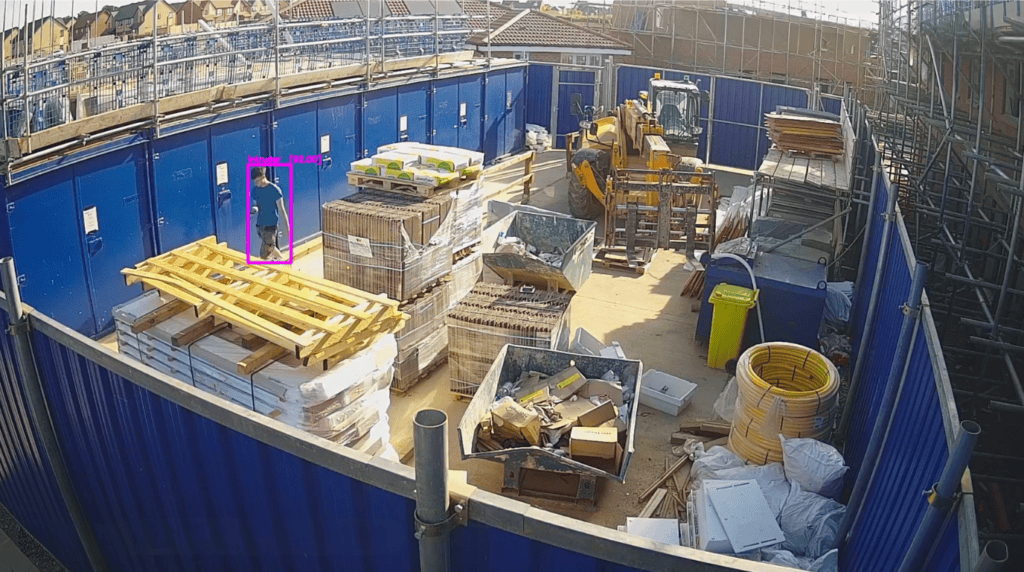
What a lone worker risk assessment should include
If your operations include lone working on remote sites, your risk assessment should specifically address:
- The nature and duration of lone working activities on the site
- The specific hazards present, terrain, equipment, environmental conditions
- Communication arrangements, how the lone worker stays in contact and how often
- Check-in procedure, agreed intervals and what happens if a check-in is missed
- Emergency response, how help reaches the site and how quickly
- Monitoring provision, what oversight is available for the lone worker on site
- Review triggers, when the assessment will be updated if working arrangements change
Monitored CCTV appears directly in that list as a control measure, it is not a substitute for a full lone worker policy, but it is a meaningful component of one.
How SkyGuard can help
SkyGuard’s remote site CCTV systems are self-contained, solar-powered, and monitored 24/7, making them practical for exactly the kind of remote locations where lone working risk is highest. Our systems require no mains power or groundworks, can be operational within hours, and provide continuous monitored oversight regardless of mobile signal conditions on site.
to discuss lone worker monitoring for your remote sites.