
NEWS
Retail Site Security Hire UK: Protecting Pop-Ups, Seasonal Sites and Logistics Hubs
The retail landscape in the UK has changed considerably in the last decade. Alongside permanent stores, a significant and growing proportion of retail activity now happens in temporary or semi-permanent settings, pop-up shops, seasonal markets, outdoor retail villages, click-and-collect distribution points, and temporary logistics hubs that appear ahead of peak trading periods and disappear once demand subsides.
Each of these settings shares a common security challenge: they need professional-grade protection, fast, for a defined period, without the cost or complexity of a permanent installation. And each of them is more vulnerable than a permanent retail environment, because the temporary nature of the setup is itself a signal to opportunist thieves that oversight may be limited.
This article covers the specific security risks facing temporary and seasonal retail operations in the UK, and how CCTV hire provides flexible, effective protection that matches the pace and scale of how modern retail actually works.
The risk profile of temporary retail sites
Permanent retail premises benefit from established security infrastructure, fixed CCTV, alarm systems, roller shutters, and the general deterrent effect of a building that looks like it has always been there and will continue to be there. Temporary retail settings have none of that baseline.
The most common security issues affecting pop-up and seasonal retail sites include:
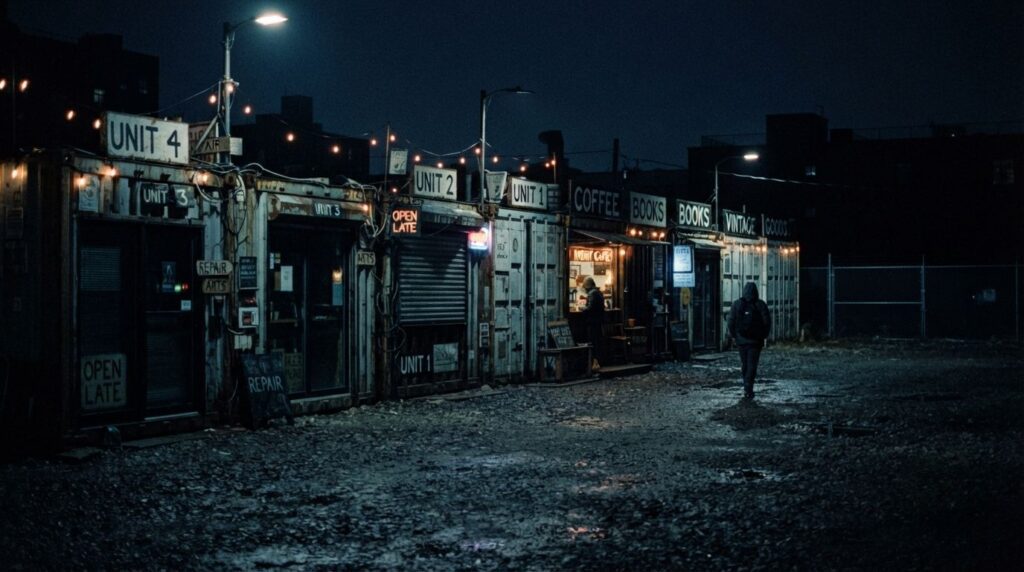
Stock and merchandise theft: Temporary retail units, market stalls, and pop-up shops often carry significant stock value in settings with limited physical security. Overnight stock left on site, whether in temporary storage units, containers, or locked units, is a consistent target.
Equipment and infrastructure theft: Generators, lighting rigs, point-of-sale equipment, and refrigeration units all have immediate resale value and are frequently targeted on sites that lack visible monitoring.
Seasonal logistics hub vulnerability: In the run-up to peak trading periods, temporary distribution and fulfilment hubs hold extremely high stock values in locations that have been established quickly and may not yet have adequate security in place. The combination of high value and limited security infrastructure makes these sites a priority target for organised retail crime groups.
Overnight and out-of-hours exposure: Most temporary retail sites operate during defined trading hours, leaving an extended out-of-hours window during which the site is unstaffed. Without monitored security, that window is effectively open.
Cash and payment infrastructure: Temporary sites operating cash tills, card terminals, or ATMs carry a financial infrastructure risk that goes beyond merchandise theft.
Why permanent security solutions don’t fit temporary retail
The mismatch between permanent security infrastructure and temporary retail is straightforward but worth stating clearly, because it explains why so many temporary retail sites end up underprotected.
A permanent CCTV installation involves groundworks, cable runs, mains power connections, and a fixed camera array designed for a specific building layout. The lead time from survey to operational system is typically several weeks. The cost is a capital investment. None of this makes sense for a site that will exist for six weeks over Christmas, or a pop-up that trades for a single weekend.
Manned guarding is a more flexible option; guards can be deployed quickly, but the cost on an overnight basis across a full trading season is high, and a single guard on a large temporary site provides limited deterrence against organised theft.
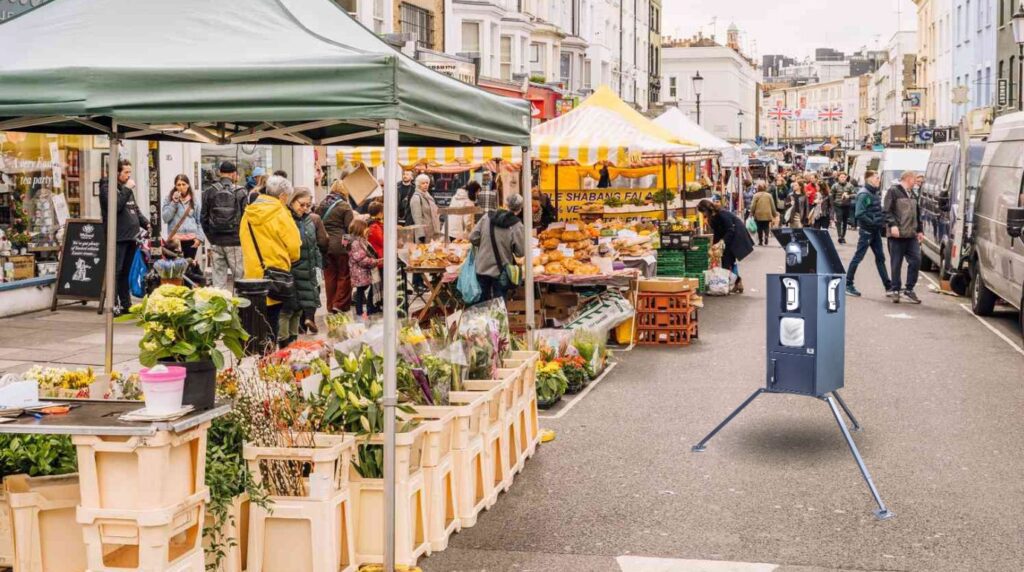
CCTV tower hire solves the problem cleanly. A self-contained, solar-powered unit can be on site and operational within hours, no groundworks, no mains connection, no capital expenditure. The hire period matches the trading season exactly, and the system is collected when the site closes. 24/7 ARC monitoring is active from the moment the system is commissioned.
What a well-specified retail site security setup looks like
The coverage priorities on a temporary retail site are different from a construction site but follow the same layered logic, deterrence, detection, response, and evidence.
Perimeter and entrance coverage
The site perimeter and primary entrance point should be covered from day one, ideally before stock or equipment arrives. A CCTV unit positioned to cover the site entrance gives you a record of every vehicle and individual accessing the site, and signals to anyone approaching that the site is actively monitored.
Stock storage and high-value areas
Wherever your highest-value stock or equipment is concentrated overnight, a locked container, a storage unit, or a refrigeration area, that is where a camera should be focused. Coverage of the storage area, combined with adequate lighting, removes the darkness that opportunist thieves depend on.
Cash handling and payment areas
If your site operates tills, safes, or cash storage overnight, those areas warrant specific camera coverage. This is as much about internal risk management as external theft, clear footage of cash handling procedures protects the business in the event of a discrepancy as well as a theft.
Lighting integration
As with any site, cameras and lighting work as a system. A camera covering a dark area produces footage that is effectively useless for identification or prosecution. Positioning a lighting unit alongside each camera, or specifying a CCTV tower with integrated lighting, ensures the footage you capture is actually usable.
The insurance and liability angle
Retail businesses operating temporary sites carry the same insurance obligations as permanent retailers, public liability, stock cover, and employers’ liability where staff are present. The security provision on a temporary site directly affects both the terms of that cover and the outcome of any claim.
Insurers assessing a stock theft claim from a temporary retail site will examine whether adequate security was in place. A monitored CCTV system, documented in writing and operational during the period of the claim, is a material factor in whether the claim is paid and at what value.
For businesses operating multiple temporary retail sites across a season, Christmas markets, summer festivals, pop-up retail programmes, a consistent, documented security specification across all sites also helps at annual policy renewal, demonstrating a professional approach to risk management that underwriters respond to positively.
How SkyGuard can help
SkyGuard provides CCTV and lighting hire for temporary and seasonal retail sites across the UK, fast to deploy, professionally installed, and monitored 24/7 from a staffed ARC. Whether you’re running a single pop-up for a weekend or a network of seasonal sites across a trading period, we can match the hire specification and timeline to your exact requirements.
to discuss security hire for your next retail site.