
NEWS
How Temporary CCTV Hire Supports Insurance Claims When Things Go Wrong
No one hires a CCTV system expecting to need it. But when a theft, a break-in, or a third-party incident occurs on a temporary site, the quality of your CCTV footage and the documentation your monitoring provider generates becomes the single most important factor in whether your insurance claim succeeds, and at what value.
This is worth understanding before you hire, because not all CCTV systems produce evidence that insurers can work with. The difference between a system that supports a claim and one that doesn’t is largely down to specification decisions made at the point of hire.
What a loss adjuster looks for
When a claim is made following a site incident, the insurer appoints a loss adjuster to assess the circumstances of the loss and whether it falls within the policy. The loss adjuster’s investigation of the security provision will focus on several specific questions:
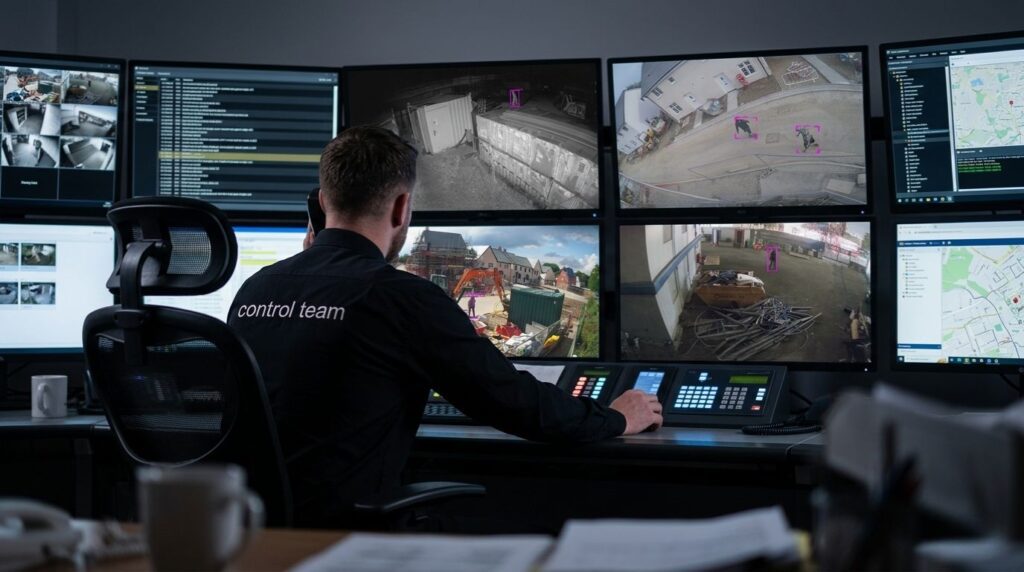
Was the site adequately monitored? A recording-only system that captures footage with no active oversight does not demonstrate adequate monitoring. A 24/7 staffed ARC monitoring contract, where a human operator reviews alerts in real time, does.
Is the footage usable? Low-resolution footage, poorly lit footage, or footage without reliable timestamps has limited evidential value. A loss adjuster working with footage that cannot identify individuals or establish a clear timeline of events will struggle to support the claim.
Was the system operational at the time of the incident? A CCTV system that was installed but not functioning, due to a power failure, a damaged camera, or a lapsed monitoring contract, provides no evidential support. A system with solar and battery hybrid power and a 24/7 monitoring contract that logs every operational period is demonstrably continuous.
Is there a documented incident record? An incident report generated by the monitoring centre at the time of the event, timestamped, with footage reference, and a record of the operator actions taken, is contemporaneous evidence that an insurer can rely on.
The four elements of claim-supporting CCTV
1. Resolution sufficient for identification
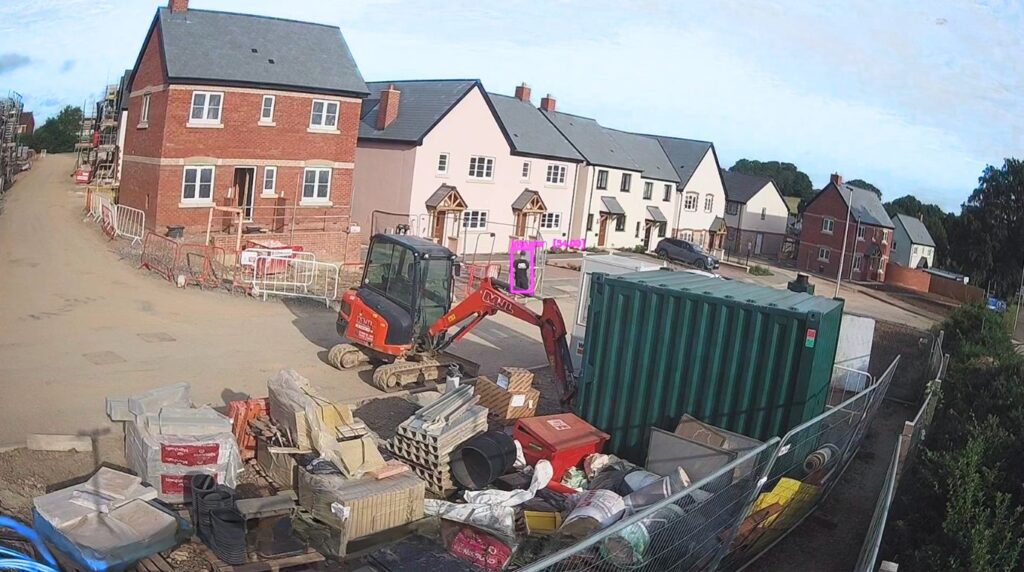
The practical minimum for footage that supports an insurance claim or a police investigation is 4MP, enough resolution to identify individuals, read number plates, and show the detail of what was taken. Lower resolution footage can establish that an incident occurred but rarely provides the detail that makes a claim defensible or a prosecution viable.
2. Reliable timestamping
Every frame of footage needs an accurate, reliable timestamp. This is a chain-of-custody requirement, footage without reliable timestamps cannot be reliably placed in a sequence of events, which undermines its evidential value. A properly specified monitoring system maintains timestamp accuracy as a standard operational requirement.
3. Secure cloud storage
Footage stored locally on the tower unit can be stolen along with everything else in a serious incident. Cloud-backed storage means the footage exists independently of the physical system, it cannot be destroyed or taken. It also means the footage can be retrieved and shared with the insurer and police quickly, without waiting for physical media recovery.
4. Contemporaneous incident documentation
The monitoring centre’s incident log, generated at the time of the event, not reconstructed after the fact, is the most valuable piece of documentation an insurer receives. It records what was detected, when, what the operator saw, what action was taken, and the outcome. This is the document that contextualises the footage and establishes the chain of events.
What to confirm with your hire provider before signing
Before committing to a temporary CCTV hire contract, ask specifically:
- What is the camera resolution of the units being hired?
- Is footage stored in secure cloud backup, or local storage only?
- Is the system 24/7 ARC monitored by a staffed centre?
- Does the monitoring provider generate a written incident report for every activation?
- How quickly can footage be retrieved and shared with an insurer or police following an incident?
- What is the power backup if solar charging is insufficient, is there a battery reserve?
A provider who can answer all of these clearly is one whose system will support you when you need it most.
How SkyGuard’s systems support claims
SkyGuard’s hired CCTV systems are specified to the standard that insurance claims require: 24/7 ARC monitoring, cloud-backed footage storage, timestamped recording, and a written incident report for every activation. If an incident occurs on your site, we can provide the documentation and footage your insurer needs quickly and without complication.
to discuss the right specification for your site.