
NEWS
Protecting Plant Compounds: The Need for Dedicated Security
The plant compound is the highest-value concentration of assets on most active construction sites. An excavator, a telehandler, a couple of dumpers, and a generator can represent £200,000 or more of equipment in a relatively small area. It is the area that organised plant theft groups target first, assess most carefully, and, if security is inadequate, return to repeatedly.
Yet on many construction sites, the compound gets a steel gate and a padlock, and the CCTV tower is positioned to cover the site entrance rather than the compound itself. That is a security gap with a significant price tag attached.
Why the compound demands dedicated coverage
It’s the primary target
Organised plant theft in the UK is increasingly intelligence-led. Criminal groups identify high-value machines, confirm their location through site observation and online sources, and plan their approach before committing. The plant compound is not a secondary target, it is the objective. Security that protects the perimeter but not the compound specifically is security that has not addressed the actual threat.
Gates are not adequate protection
A steel compound gate on a standard frame can be defeated with an angle grinder in minutes. A close-shackle padlock on a high-security hasp raises the bar, but the physical security of the gate is only one element of the defence. Without detection and response, a defeated gate is just the beginning of the incident rather than the end of it.
Plant can be moved quickly
Modern construction plant is designed to be mobilised rapidly, that is its purpose. An experienced plant operator working for a theft gang can move an excavator from the compound to a waiting low-loader in under ten minutes on a clear site. The window between detection and departure is short. Without a monitoring system that detects the intrusion within seconds and initiates a response immediately, the plant is gone before anyone knows it was taken.
What dedicated compound security looks like
A CCTV unit positioned specifically for the compound
The most impactful single change on most sites is repositioning, or adding, a CCTV unit to provide dedicated compound coverage, rather than relying on a camera positioned for general site coverage to incidentally see the compound.
A dedicated compound unit should cover:
- The compound gate and immediate approach
- The full interior of the compound, with particular focus on the highest-value machines
- The area immediately outside the compound where a low-loader would park to load
The 360° coverage of a properly positioned rapid deployment tower is well suited to this; a single unit can cover the compound interior, gate, and approach simultaneously.
AI-powered detection calibrated for the compound
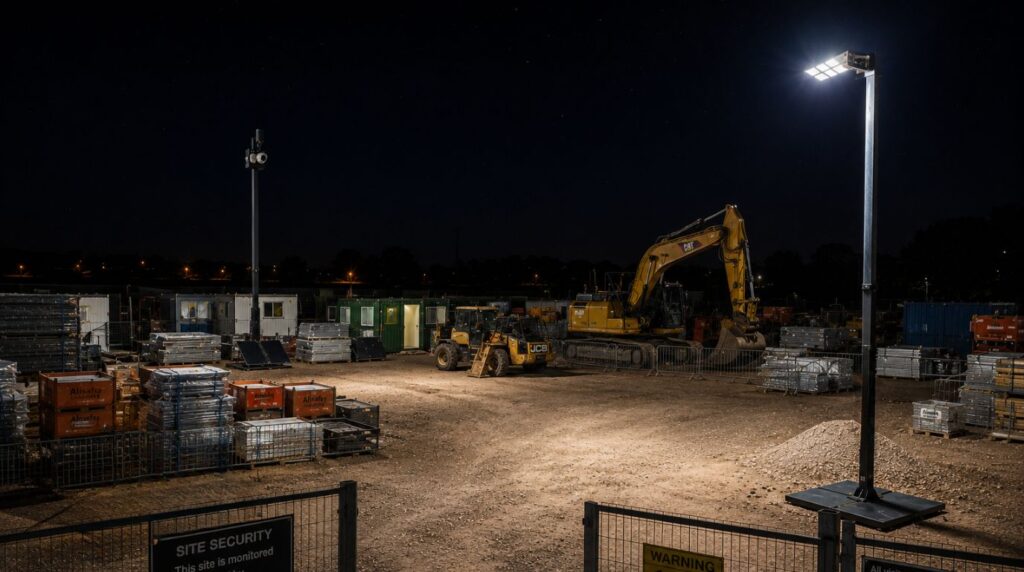
AI motion detection on a compound-focused unit should be calibrated for the compound environment specifically, accounting for the movement of plant engines cooling down after shutdown, the reflection of headlights from passing vehicles outside the perimeter, and the specific thermal signature of warm machinery in cold conditions.
A system calibrated for general site use may generate false alerts from compound-specific sources; a properly configured system for a compound environment minimises these and keeps the response credibility of the monitoring high.
Lighting integrated with the camera position
The compound is the area that most benefits from dedicated lighting. A dark compound with a camera positioned at its edge produces limited footage; a well-lit compound with a camera covering the full interior produces footage that can identify individuals, confirm the identity of the plant being moved, and support prosecution.
Physical measures that complement CCTV
Dedicated compound security is most effective when CCTV and monitoring sit alongside appropriate physical measures:
- Immobilisation: keys removed, steering locks fitted, and where available, factory immobilisers activated on all plant overnight
- Asset marking: forensic marking of all plant with UV-readable identifiers and visible deterrent stickers
- Compound lighting: as above, integrated with the camera position
- Gate specification: solid steel gate on a properly anchored frame, with high-security padlocks on close-shackle hasps
None of these physical measures replaces monitored CCTV; they complement it. A gate with a high-security padlock slows a theft group by minutes; a monitored CCTV system that detects the approach and initiates a police response changes the outcome entirely.
How SkyGuard can help
SkyGuard’s rapid deployment CCTV towers can be positioned and configured specifically for plant compound coverage, camera angle, detection calibration, and lighting integration, all specified for the compound environment.
to discuss dedicated compound security for your site.