
NEWS
Solar-Powered CCTV Towers: The Operational Case
The diesel generator has been a fixture of temporary site security for decades. Loud, maintenance-heavy, fuel-dependent, and environmentally costly, it kept the cameras running but created its own set of problems in doing so. In 2026, solar and battery hybrid CCTV towers have largely replaced it as the power source of choice on well-managed temporary sites. Not just for environmental reasons, but for operational ones.
How solar and battery hybrid power works
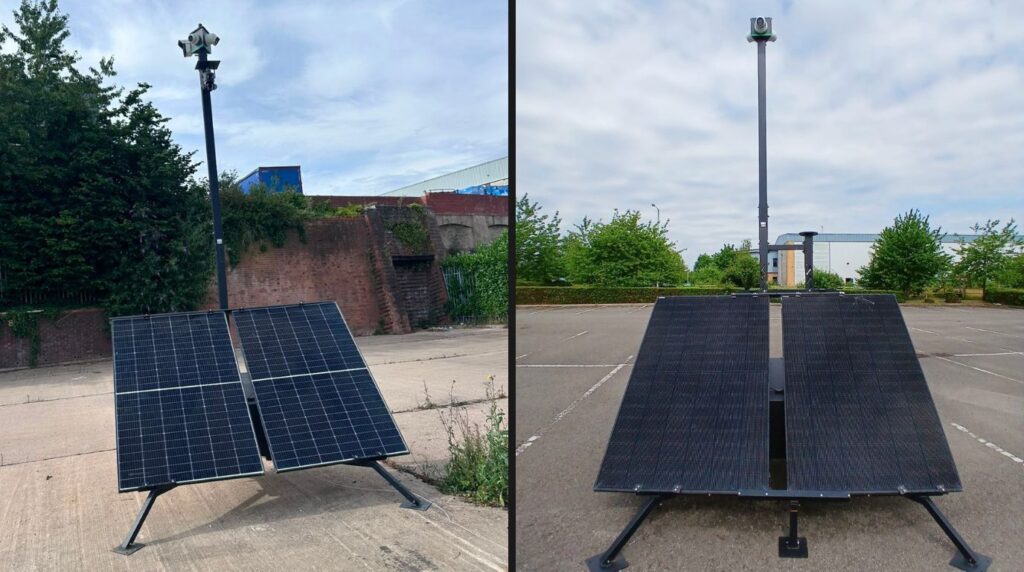
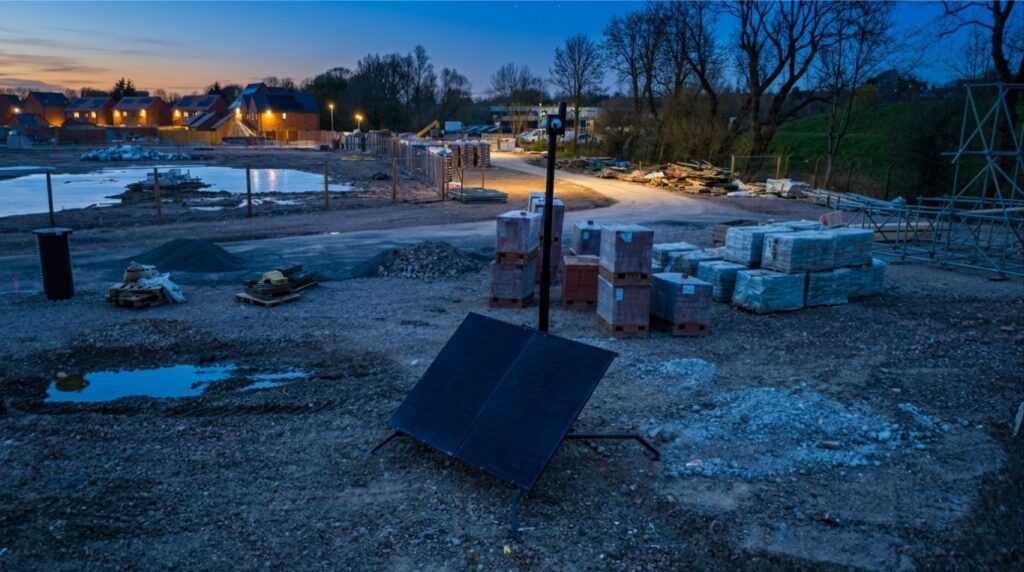
A solar-powered CCTV tower integrates photovoltaic panels directly into the tower structure, charging an onboard battery bank during daylight hours. The battery then powers the camera system, AI detection engine, siren, speaker, and monitoring transmission through the night, without any external power source.
The system is designed to manage its own power budget. During periods of peak solar input, the battery reaches full charge and excess energy is managed by the system controller. During overnight operation, the battery drains at a rate determined by the system’s active components, typically well within the capacity of a properly specified battery bank for a full overnight period even in winter months.
On sites where solar input is consistently low, in heavily shaded locations, or during extended periods of overcast weather in winter, supplementary power options can be connected. But for the vast majority of UK sites across the year, solar and battery hybrid is sufficient without any additional power source.
The operational advantages
No generator dependency
A diesel generator requires fuel deliveries, regular servicing, oil changes, and a failure response plan for when it breaks down, which it inevitably does, usually at an inconvenient time. Every generator dependency is an operational risk. Solar eliminates it entirely.
On a remote site, a utilities project in open countryside, a pipeline installation miles from the nearest fuel supplier, the logistics of generator fuelling are a genuine operational burden. A solar-powered system removes that burden completely.
No noise
A running diesel generator is audible at significant distance. On sites near residential areas, this creates neighbour relations issues and may impose operating hour restrictions. A solar-powered CCTV tower runs silently, day and night, with no noise impact on the surrounding area.
Reduced maintenance overhead
The fewer moving parts a system has, the less maintenance it requires. A solar and battery hybrid system has no engine, no oil, no fuel system, and no exhaust, the primary maintenance items that consume time and cost on a generator-powered setup. The result is a more reliable system with a lower total operational cost over the hire period.
Instant readiness
A generator needs to be started, warmed up, and checked before it powers a system. A solar and battery hybrid tower is continuously powered, the system is always on, always monitoring, with no startup procedure required.
The environmental case
Construction and infrastructure projects are under increasing pressure to reduce their carbon footprint, from clients, from planning conditions, and from the supply chain sustainability requirements of major contractors. A diesel generator running through the night to power a CCTV system is a direct carbon cost that solar eliminates.
For projects pursuing BREEAM ratings, operating under sustainability-linked contracts, or reporting against Scope 3 emissions, switching from generator-powered to solar-powered security is a small but documentable carbon reduction. In aggregate across multiple sites and a full project programme, it is a meaningful one.
Increasingly, procurement teams at major contractors are asking their supply chain, including security providers, about the environmental specification of their equipment. A solar-powered system is the right answer to that question.
What to confirm when hiring
When hiring a solar-powered CCTV tower, confirm:
- Battery capacity: how many hours of overnight operation does the battery support at full load?
- Winter performance: what happens on a site with limited solar input during short winter days?
- Supplementary power options: is there a connection point for supplementary power if needed?
- System monitoring: does the monitoring centre receive alerts if battery levels fall below a safe threshold?
A provider who can answer these questions specifically, with hours and specifications rather than general assurances, is one whose system has been properly engineered rather than assembled from generic components.
SkyGuard’s solar-powered systems
SkyGuard’s CCTV towers are solar and battery hybrid as standard, no generator, no fuel, no noise. Fully operational on any terrain, in any UK location, from the moment they’re commissioned.
to discuss solar-powered CCTV hire for your next project.